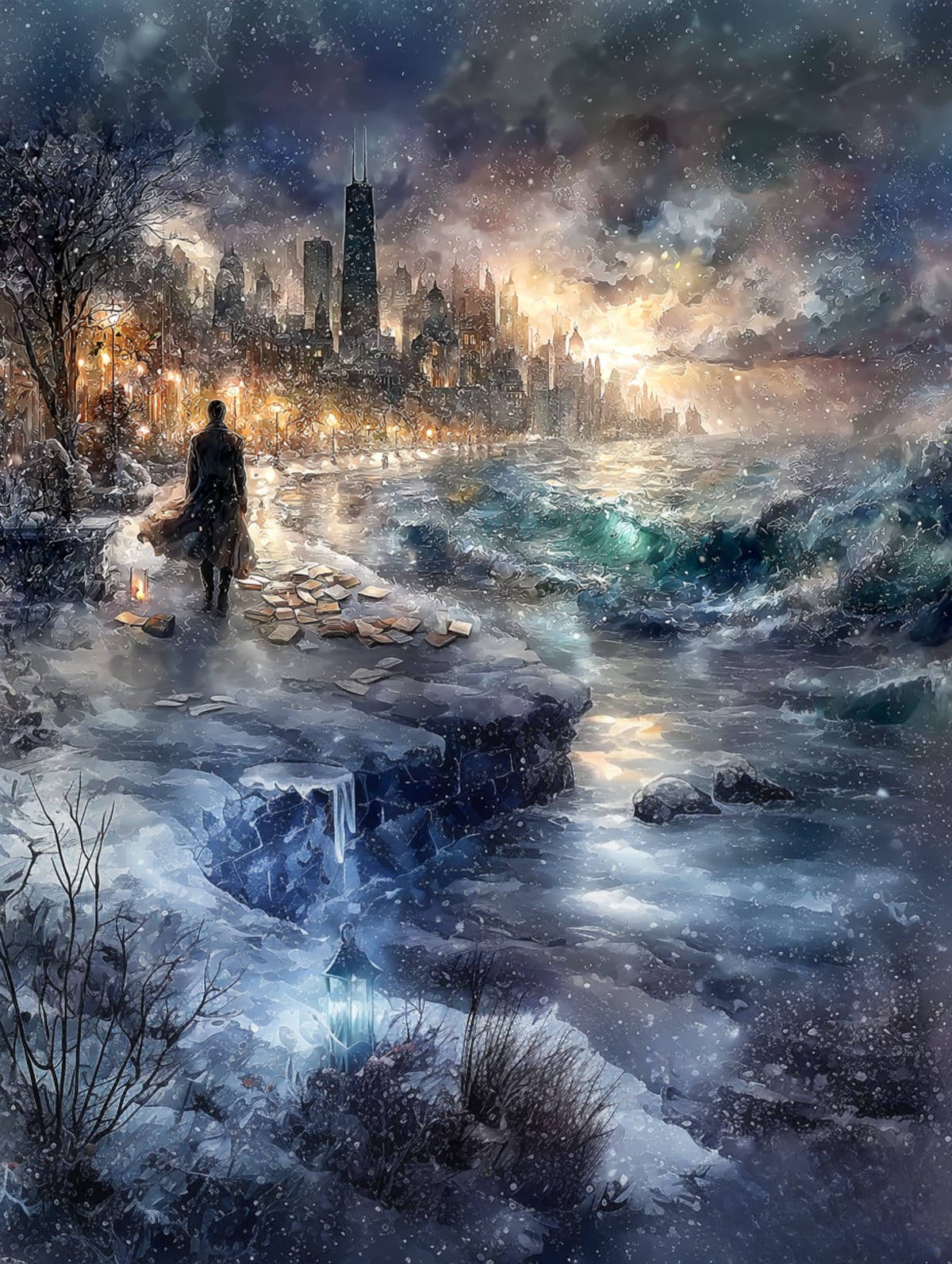
Winter moves differently in Chicago. The light thins out by late afternoon, the lakefront wind sharpens into something with teeth, and suddenly it feels like the world has slipped sideways into a quieter, stranger version of itself. For writers and readers who love haunted houses, sea debts, and liminal magic, this season can feel oddly familiar—and yet, the pressure to “finish the year strong” often slams straight into a brain that just wants to slow down. This post is a love letter to the dark season, and an invitation to use winter as creative compost instead of a productivity test.
The winter brain: why creativity feels different now
Shorter days change how attention, mood, and memory behave, and that has a direct impact on the kind of stories we’re drawn to and the ones we’re capable of writing. When there’s less sensory noise—fewer festivals, less travel, more evenings spent inside—the internal landscape gets louder: old memories surface, unresolved questions tug at the edges of consciousness, and characters start whispering about things they weren’t ready to admit in July.
If you gravitate toward paranormal or urban fantasy laced with trauma recovery and folklore, you are already in love with thresholds: twilight, in-between states, places where the veil is thin. Winter is that threshold in real life, a season where everything looks frozen on the surface while entire ecosystems of feeling and thought churn underneath. Instead of trying to impose summer’s pace on a winter brain, you can treat this time like low tide: the water pulls back, and suddenly you can see all the shipwrecks, bones, and lost trinkets your stories have been hiding.
Using winter as story compost
One of the most powerful shifts you can make in December and January is to stop judging your creativity by finished scenes and start paying attention to fragments. Think of every abandoned draft, half-there character, or weird line you scribbled at 2 a.m. as compost, not failure—the raw material that needs a little darkness and time before it can grow into something rich and alive.
Letting ideas moulder (on purpose)
Try keeping a “fragments notebook” just for winter. Instead of demanding complete chapters from yourself, use it to collect:
· Single lines of dialogue that feel too sharp to lose.
· Stray images that won’t leave you alone: a staircase filling slowly with seawater, a doorway that only appears during snowstorms, a coffee shop that remembers what you’re afraid of.
· Questions your characters don’t want to answer yet: What did you promise the sea? Who did you leave behind in that haunted house?
None of this has to be immediately useful. The goal is to capture the pieces before they sink back below the surface. Later, when you’re plotting or revising, you’ll have a trove of winter-born details that add depth and texture to your worlds.
You can also do a weekly “shadow pass” on one character. Pick a protagonist, villain, or side character, and spend a page exploring how they react to silence, cold, and isolation. Do they hate the quiet, or do they finally feel safe when everything else goes still? What memory does the first real snowfall drag up for them? Those answers become fuel for future conflicts, reveals, and emotional turning points.
Slower thinking, deeper darkness
Winter naturally slows pace. Walks take longer because of ice; errands get compressed into narrow bands of daylight; everyone moves through the world in heavier layers. This slowdown can be deadly to a “hustle at all costs” mindset—but it is perfect for psychological stories where internal change matters as much as external action.
When you stop demanding rapid-fire output, you give yourself permission to sit longer with why your characters make the choices they do. You can interrogate the emotional cost of a magical bargain, the long shadow of a broken promise, or the kind of debt a city might demand from the people who love it. That extra thinking time often shows up later as tighter motivations, more haunting imagery, and endings that feel inevitable instead of convenient.
Winter rituals for haunted, hopeful creativity
You do not need a four-hour morning routine to survive the dark season with your creativity intact. What you need are small, repeatable rituals that tell your brain: this is when we tend the fire. Here are three that can fit into even the most over-scheduled week.
Ritual 1: the candle and the threshold
Pick a time in the evening when darkness has fully settled—maybe 8:00 p.m.—and light a candle or switch on a single warm lamp. For the next 20–30 minutes, do exactly one small creative task:
· Write one paragraph of a scene.
· Journal from a character’s point of view about their day.
· Read a few pages of a book whose mood you want to absorb.
The point is not progress in word count; it is training your nervous system to associate that tiny window with safe, focused creative time. Social analytics from the past few months suggest that deeper, more resonant content outperforms sheer volume anyway—this ritual leans into that truth at the drafting level.
Ritual 2: the winter walk as worldbuilding
If your weather and body allow, choose one regular winter walk and treat it as field research. In Chicago, that might mean the lakefront when the water is steel-grey and the wind feels like it’s trying to turn you into a ghost, or a side street lined with old brick buildings that look like they’re still keeping secrets from the 1920s.
As you walk, pay attention to:
· What sound snow makes under boots versus bare pavement.
· How streetlights distort shadows on fresh ice.
· Where you feel watched, even when you’re alone.
When you get home, jot down one or two of those details. Maybe the way the wind screams around a corner becomes the sound of a haunted manor breathing. Maybe the color of lake-ice at dusk becomes the exact shade of a sea that remembers every debt. You’ve turned everyday movement into a quiet collaboration between your body and your worldbuilding.
Ritual 3: the cozy autopsy
Once a week, pick one darker book, film, or episode and perform a “cozy autopsy.” Make tea, pile on blankets, and then watch or read with one specific craft question in mind, such as:
· How does this story handle unreliable perception without losing reader trust?
· Where does humor slip into a spooky scene, and why does it work instead of breaking tension?
· How are memory, guilt, or grief woven into the setting itself?
Pause to jot down answers, not in academic detail but in the language you’ll remember later: “The house feels guilty before the protagonist ever does,” or “The ocean is basically a character with a long memory.” These notes become seeds for future essays, TikToks, or story choices—and they’re generated during genuine rest, not forced hustle.
What not to demand from yourself in winter
The turn of the year comes with a crush of messages about reinvention: new routines, new goals, new word counts. That “fresh start” energy can be motivating, but it also collides with the very real way winter bodies and brains operate—especially for creatives already dancing on the edge of burnout.
As you move through December and into January, consider setting a few firm boundaries:
· No comparing your current pace to your summer self. July you had different daylight, different obligations, and a different nervous system.
· No punishing yourself for days that are more input than output. Reading, walking, listening, and thinking are not procrastination; they are the fuel your stories run on.
· No turning every ritual into content. Some candlelit evenings, some walks along the water, some notes in your margins are allowed to exist purely for you.
Your readers benefit far more from one book that has been steeped in this slower, deeper attention than from a flurry of half-finished projects you muscled through to meet an arbitrary goal. The same analytics that reward heartfelt essays and thoughtful craft posts over scattershot promotion also apply to your drafting life: depth over volume wins.
Join me in the dark season
If winter feels heavy to you, you are not alone. If it feels strangely magical—like the world is a little thinner around the edges and anything could step through the door at dusk—you are also not alone. This is the season where stories about haunted houses, storm-tossed seas, and liminal cities gather their strength in the shadows before they surge into the light.
Over the next few months, I’ll be using these very rituals—fragments notebooks, winter walks, cozy autopsies—to layer in final emotional and atmospheric touches on upcoming tales of bargains, ghosts, and cities that remember what you owe them. If you’d like to walk through the dark season with me, share your own winter rituals or current reads in the comments, and consider joining my email list for more behind-the-scenes notes and early peeks at what’s rising with the tide in 2026.