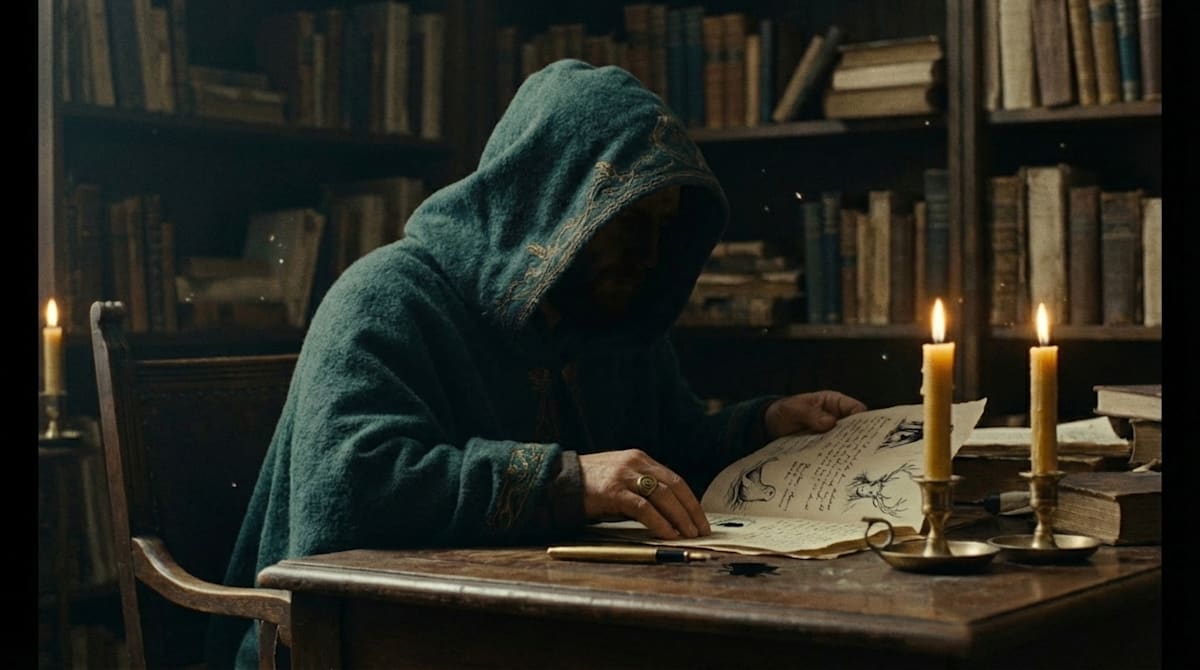
There is a particular kind of character who refuses to leave the room when you close the book. They linger like the echo of a hymn in an empty chapel, or the salt-scent that remains long after the tide has pulled away. These are not simply “well-developed” characters in the craft-book sense; they are mythic shadows wearing human faces.
Folklore is the oldest language of the psyche. Long before psychology had terms for attachment wounds, cognitive dissonance, or moral injury, people told stories about shapeshifters who could not stay, kings who could not sleep, and bargains that cost more than the bargainer understood. Myth was the first case study.
When dark fantasy ignores that inheritance, characters often feel strangely hollow, no matter how many traits, hobbies, or traumas the writer painstakingly assigns them. They move, they speak, they even suffer, but they do not haunt. To haunt a reader, a character must carry something older than themselves.
Folklore as the skeleton of the soul
Think of folklore as a bone structure beneath the skin of your character. You can change the fashion, the scars, the gestures—but the shape of the skull remains. A selkie myth, for instance, offers an immediate psychological architecture: a being torn between two worlds, whose very nature guarantees a permanent homesickness.
When you build a character on that skeleton, you are not merely giving them “conflict.” You are giving them a metaphysical wound. They do not just dislike commitment; they are bound to the tide. They do not just struggle with boundaries; their own skin was once removable, stolen, bartered, or hidden.
Suddenly, every choice they make becomes inevitable and tragic in a way that readers feel in the gut. The folklore frame makes the psychology click.
The same is true of trickster tales, revenant legends, or ballads about cursed merchants who cannot stop making deals. A trickster-based character will always test the edges of any system. A revenant-shaped soul will be unable to rest while any injustice remains unresolved. A cursed merchant will turn every relationship into an exchange rate.
You can call these traits “motivation” if you like, but myth calls them fate. Dark fantasy thrives precisely at that crossroads where psychology and fate blur.
The uncanny familiarity of myth
Readers rarely say, “Ah, yes, this protagonist is clearly inspired by maritime changeling lore.” Most will not consciously identify the source text at all. What they will feel is recognition.
Folklore survives because it captures recurring patterns of human fear and desire. The forest in the fairy tale is not any particular forest; it is the place where the ordinary rules fall away and the self is tested. The sea is not just water; it is the pull toward dissolution, oblivion, and transformation. The bargain with the uncanny stranger is not simply a plot device; it is a dramatized version of every compromise a person makes against their own conscience.
When you anchor your character in one of these patterns, the reader senses that they have met this soul before in another story, another life, another dream. That déjà vu is powerful. It creates depth without exposition.
A woman who keeps returning to a destructive relationship may feel, on the surface, like any contemporary figure. But if you quietly map her onto the motif of the girl who dances with death each midnight, the story shifts. Her choices stop being random and start aligning with a pattern that has been whispering through centuries.
Dark fantasy, with its love of liminal spaces—bridges, shorelines, alleyways, thresholds—is already half in conversation with folklore. The cities and seas of the genre are rarely just settings; they are stages where old narratives replay themselves in new costumes. Allowing that recursion into your character work gives them the weight of echo.
Myth instead of metrics: an anti-hustle approach to character
Most modern writing advice offers spreadsheets. You are told to fill in questionnaires: your character’s favorite food, their childhood pet, their greatest fear, their ideal vacation. There is a quiet assumption that if you answer enough questions, depth will eventually appear.
But psychology does not emerge from volume; it emerges from pattern. The hustle approach to character building treats you like a content farm of facts. The anti-hustle approach asks you to slow down and choose one governing myth.
Instead of twenty traits, choose one folklore current that runs beneath everything your character does. Are they living out the story of Orpheus who cannot resist looking back, even when warned? Are they reenacting the motif of the fisherman who can never quite leave the sea, no matter how comfortable the house he builds inland?
Once you choose, you can stop chasing endless detail and begin tracing variations on a theme. The myth becomes a tuning fork. Every scene becomes a chance to strike it and listen to how this particular character resonates.
Anti-hustle character work is not less rigorous; it is more focused. You are trading breadth for depth, accumulation for archetype.
Folklore as a mirror, not a costume
There is a danger, of course, in using folklore only as aesthetic. Cloaks, curses, saltwater and fog—these are alluring textures, but on their own they are costume, not character. The real work happens when you ask: What part of the reader’s shadow is this myth reflecting back?
A selkie who must choose between land and sea is not just a pretty image; it is an externalization of the person who feels split between duty and desire, between the life they built and the life that would make them feel real. A revenant who cannot rest until justice is done is an echo of everyone who has ever been unable to move on from a betrayal.
When you understand the psychological question beneath the folklore, your character stops being a trope and becomes a mirror. The reader is not simply watching a myth unfold; they are recognizing their own patterns in mythic form.This is why the most effective use of folklore in character design is often subtle. You do not need to explain the myth on the page. You only need to let it guide the emotional logic.
Practical questions for weaving myth into character
If you want to bring folklore into your character work without turning your drafting process into another productivity project, begin with a few slow, deliberate questions.
· Which piece of folklore, legend, or recurring dream-image does this character unconsciously resemble?
· What is the core bargain, taboo, or wound at the heart of that myth?
· How would someone who is “living out” that pattern behave in ordinary, modern situations—at work, in love, at the dinner table?
· What would it cost them to break the pattern, and what kind of person would they have to become to do it?
Notice that none of these questions requires a massive worksheet or daily word-count. They require time, attention, and a willingness to sit with discomfort—the opposite of hustle.
You can ask them in a notebook at midnight, or during a ten-minute pause with your coffee. The goal is not to produce more pages; it is to see the pages you already have through a mythic lens.
When the city becomes a myth, too
Folklore is not limited to forests and ancient coasts. Cities generate their own legends: ghost trains, haunted alleys, bridges where promises are made and broken. Urban noir and dark academia thrive on treating the modern world as if it, too, were enchanted terrain.
If you write an urban setting—say, a fog-curtained Chicago bridge or a nocturnal alley where the streetlights feel like watching eyes—you are already halfway into contemporary folklore. The city becomes another character, another mythic force pressing on your cast.
A character who always walks the long way home over the same bridge may be enacting a ritual they do not fully understand. A scholar who refuses to step into the library after dusk may be obeying an unspoken taboo. Mapping these habits to invented urban myths—stories of what happened once, on a night just like this—deepens both your setting and your character psychology.
The result is an atmosphere where every choice feels overdetermined, weighted with echo. That is where dark fantasy finds its power: not only in strange magic, but in the sense that the world has been here before, watching.
Let the myth surface slowly
You do not need to name the folklore in your text. You might never use the word “selkie,” “baba yaga,” or “psychopomp.” The pattern can remain submerged, like a shape moving beneath dark water.
As you revise, listen for where the myth is already trying to speak. Is your character always drawn to doors, keys, thresholds? Do they cling to promises, or break them compulsively? Do they collect secrets, debts, or names?
Rather than forcing a new mythology onto them, ask which existing tale their behavior resembles. Align a few more choices with that pattern, and watch how the character’s inner life begins to cohere.
In the end, the question is simple:
Is your character merely behaving, or are they reenacting something older than themselves?
The first can be interesting. The second can be unforgettable.
Slow down. Choose the myth. Let your character carry it like a secret curse… and see how long they can pretend it isn’t there.